Go Green at Home: Simple Plumbing and Heating Changes That Make a Big Difference
Making your home more environmentally friendly does not have to involve expensive renovations or dramatic lifestyle changes. In fact, some of the most effective ways to reduce your carbon footprint start with the systems you use every day, namely your plumbing and heating. From fixing leaking taps to improving heating efficiency, small changes can conserve water, reduce energy consumption, lower household bills, and help create a more sustainable future.
Fix Leaks Promptly
A dripping tap or a leaking toilet may seem insignificant, but even small leaks can waste large amounts of water over time. Regularly checking your plumbing system for leaks and repairing them quickly prevents unnecessary water loss.
Common areas to inspect include:
- Taps and showerheads
- Toilet cisterns
- Under-sink pipework
- Outdoor hoses and connections
- Water tanks and cylinders
By fixing leaks early, households can conserve water and reduce the energy required to treat and distribute it.
Install Water-Efficient Fixtures
Modern plumbing fixtures are designed to use much less water than older models while maintaining performance. Consider upgrading to:
- Low-flow showerheads
- Dual-flush toilets
- Water-saving taps
- Aerators for existing taps
These simple improvements can significantly reduce water consumption without affecting comfort or convenience.
Use Heating Controls Effectively
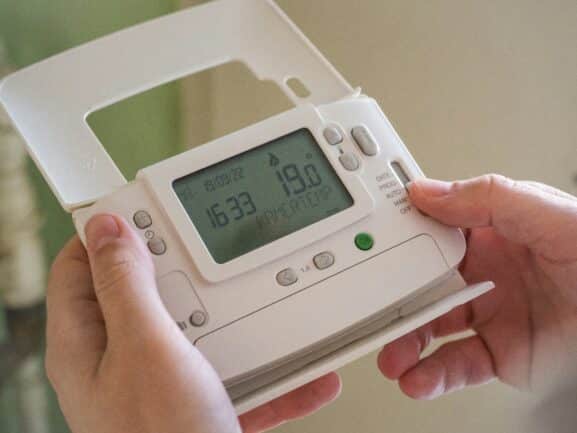
One of the easiest ways to reduce energy use at home is by managing heating systems efficiently. Smart thermostats and programmable heating controls allow homeowners to regulate temperatures according to their schedules.
Some practical tips include:
- Lowering the thermostat by 1°C when possible
- Setting heating timers to match occupancy
- Heating only rooms that are in use
- Avoiding overheating living spaces
Even small temperature adjustments can lead to noticeable reductions in energy consumption and carbon emissions. Lowering the boiler thermostat can save energy and make the boiler more efficient.
Upgrade to Energy-Efficient Boilers
Older boilers often waste energy through inefficient combustion and heat loss. Replacing an outdated boiler with a modern, energy-efficient condensing boiler can dramatically improve heating performance.
Benefits include:
- Reduced fuel consumption
- Lower heating bills
- Reduced greenhouse gas emissions
- More reliable home heating
Regular boiler servicing also helps maintain efficiency and extends the lifespan of the system.
Insulate Pipes and Hot Water Cylinders
Uninsulated pipes can lose heat as hot water travels through the home. Pipe insulation is an inexpensive solution that helps retain heat and reduces the amount of energy required to warm water.
Similarly, insulating a hot water cylinder helps keep stored water hotter for longer, reducing the need for frequent reheating and lowering energy demand.
Choose Renewable Heating Options
For homeowners looking to make a larger environmental impact, renewable heating technologies offer sustainable alternatives to traditional fossil-fuel systems.
Examples include:
- Air source heat pumps
- Ground source heat pumps
- Solar thermal water heating
- Biomass heating systems
These technologies can significantly reduce a home’s carbon footprint while providing reliable heating and hot water.
Reduce Hot Water Usage
Heating water accounts for a large share of household energy use. Simple behavioural changes can make a substantial difference, such as:
- Taking shorter showers
- Using cold water where possible
- Running full loads in dishwashers and washing machines
- Fixing dripping hot-water taps
Reducing hot water usage saves both water and the energy needed to heat it.
Harvest Rainwater
Installing a rainwater collection system can help reduce demand on the mains water supply. Collected rainwater can be used for:
- Watering gardens
- Cleaning outdoor areas
- Washing vehicles
This decreases water consumption while making use of a free and natural resource.
Maintain Your Heating System
A poorly maintained heating system typically uses more energy than necessary. Regular maintenance can improve efficiency and identify potential issues before they become costly repairs.
Maintenance tasks include:
- Annual boiler servicing
- Bleeding radiators
- Checking pipe insulation
- Cleaning filters and vents
- Monitoring system pressure
An efficient heating system uses less fuel and has a lower environmental impact.
Helping the environment starts with everyday actions at home. By focusing on plumbing and heating systems, homeowners can make a meaningful contribution to sustainability. Speak to a SNIPEF‑approved plumbing company today help with these tips. Find your nearest plumber at needaplumber.org